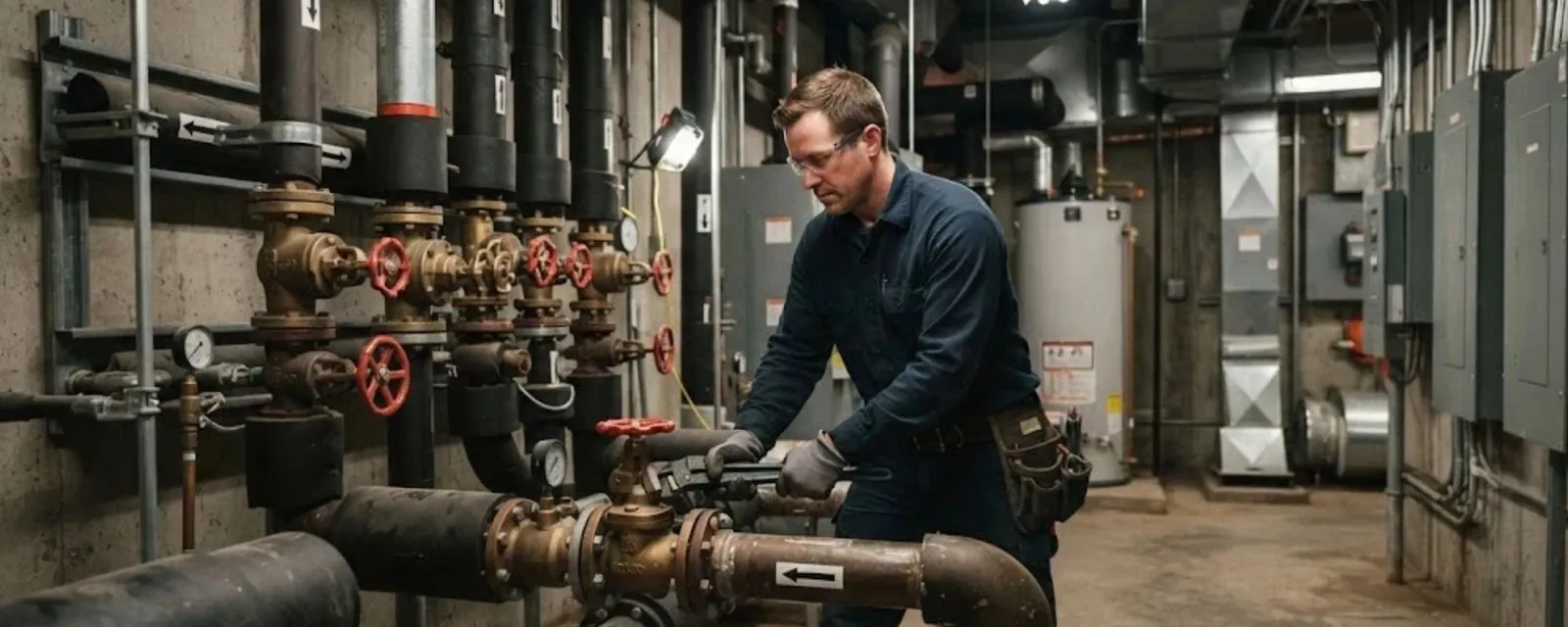
Commercial plumbing covers the water, drain and gas piping in shops, offices, restaurants and multi-unit buildings, plus the equipment that protects them. If you have an urgent failure right now, call (630) 822-9290. Our emergency line is open 24/7 and a plumber can be sent after hours.
While you wait, find the main water shutoff and close it if water is spreading. Keep customers and staff out of wet areas, and put out signs where floors are slippery. If sewage is rising, close off the restrooms and avoid contact with the water.
What cannot wait in a commercial building
Some calls can be scheduled for the next morning. These cannot.
- Sewage backing upA floor drain or restroom overflowing with waste is a health and business issue. Stop use and close the area.
- A running line you cannot shut offA broken pipe above ceilings can damage stock, equipment and finishes fast.
- No hot water in a food businessHandwashing and dish sanitizing depend on it. Ask your local health office about operating rules.
- Smell of gasLeave the building, keep others away and call 911 from outside. Do not turn on switches on the way out.
- Water at an electrical panelStay clear, stay dry and call for help.
Commercial work is not scaled-up residential work
A commercial building has bigger pipe, more fixtures per branch and often a shared system between tenants. A clog in one unit can show up in another, and a shutoff may serve a whole floor.
That is why we ask on the first call how many fixtures are affected, whether you own or lease, and who controls the building shutoffs. Those answers decide who we need on site.
Which system is which
Commercial properties often have several water-related systems. Each has its own risks and its own service.
| System | What it does | What goes wrong |
|---|---|---|
| Domestic water | Brings potable water to taps and equipment | Leaks, low pressure, failed valves |
| Sanitary drains | Carry waste to the sewer | Clogs, roots, offsets, grease |
| Backflow preventers | Stop dirty water flowing back into the supply | Failed tests, leaking relief ports |
| Grease traps and interceptors | Catch fats before they reach the sewer | Overflow, odor, full tank |
| Storm and roof drains | Carry rain off roofs and lots | Debris, ice, backing up |
| Gas piping | Feeds heaters, ranges and rooftop units | Leaks, failed connectors |
Which of these your building has depends on its use and age.
Backflow prevention
A backflow preventer is a valve assembly that keeps water from reversing and pulling contaminated water back into the building supply. You see them on irrigation lines, fire lines, boilers, car washes and food service equipment.
Many water suppliers require periodic testing by a qualified tester, and a failed device may need repair or replacement. Rules differ by system and by use, so ask the City water operator at (630) 353-8105 what applies to your property. If you have a device that drips from a relief port, call us for a check. Device choice and installation follow the standards in the Illinois Plumbing Code (Title 77, Part 890 of the Illinois Administrative Code) and the device's manufacturer guidelines.
Grease traps and interceptors
Restaurants and kitchens send fats and food solids into the drain. A grease trap or interceptor sits in the line to catch them before they reach the sewer.
When one is full, the line downstream clogs, the kitchen smells and sinks drain slowly. The device needs regular pumping, and the schedule depends on how much you cook. After a blockage, a hydro jetting pass scours the line clean, and a camera shows whether the trap is working.
Storm drains and roof drains
Storm drains handle rain, not waste. Commercial roofs often have internal drains or downspouts that tie to a storm line, and parking lots have catch basins.
Leaves, silt and trash block them, and a flat roof with a blocked drain can pond water fast. Clear the debris from roof screens when it is safe. If water backs up in a basement or a catch basin overflows, we cable or jet the line and look at it on camera. Drainage from a sump belongs on its own line, see sump pump repair.
How a commercial call runs
- 1
Call
Dispatch asks what is affected, whether the building is occupied and who can approve work.
- 2
Make safe
Close the shutoff, cordon the area and stop the leak or stop the use.
- 3
Diagnose
Camera, pressure check or fixture test finds the real cause.
- 4
Quote and approve
You hear the clear price before repair begins.
- 5
Repair and report
The fix is tested, and you get a plain summary for your records or landlord.
What affects commercial plumbing pricing
Commercial jobs vary a lot. These are the factors that change the number.
For a real number on your building, call (630) 822-9290.
Safety steps for staff and managers
Do these while you wait for the plumber.
- Know the shutoffsFind the main water shutoff and any floor or tenant shutoffs, and mark them.
- Be careful with backflow devicesDo not adjust or close valves on a backflow assembly unless a qualified tester tells you to.
- Plan after-hours accessHave a key holder, alarm code and roof or mechanical room access ready.
- Keep people off wet floorsBlock the area, post a sign and keep customers away from standing water.
Building down and customers waiting?
Call the 24/7 line and tell us what is failing. We will tell you what to shut off while a plumber is on the way.
Rental buildings and property managers
For multi-unit buildings, a call from one tenant can involve the whole stack. A managers' point of contact who can approve work and give access speeds everything up.
We can also help with planned work: new fixtures through plumbing installation, a sewer camera inspection before a purchase and a drain line cleaned before it fails.
Commercial plumbing questions from Darien businesses
Yes. Dispatch is open 24/7 at (630) 822-9290. Tell us the type of business and what is failing, and we will give shutoff advice while a plumber is on the way.
Testing is done by a qualified tester, and the rules depend on the device and the water supplier. Ask the City water operator at (630) 353-8105, and call us if a device drips or fails.
It depends on volume and the size of the device. A trap that overflows, smells or slows the sink needs service now. Ask the unit's maker or a pumper for a schedule.
Yes. Many planned jobs are done early or late to avoid customers. After-hours emergencies are handled through the same dispatch line.
Yes, with approval from whoever controls the building. Tell dispatch who the landlord or manager is so we can confirm access.
Yes. See our Downers Grove and Willowbrook pages, and give dispatch your address for timing.