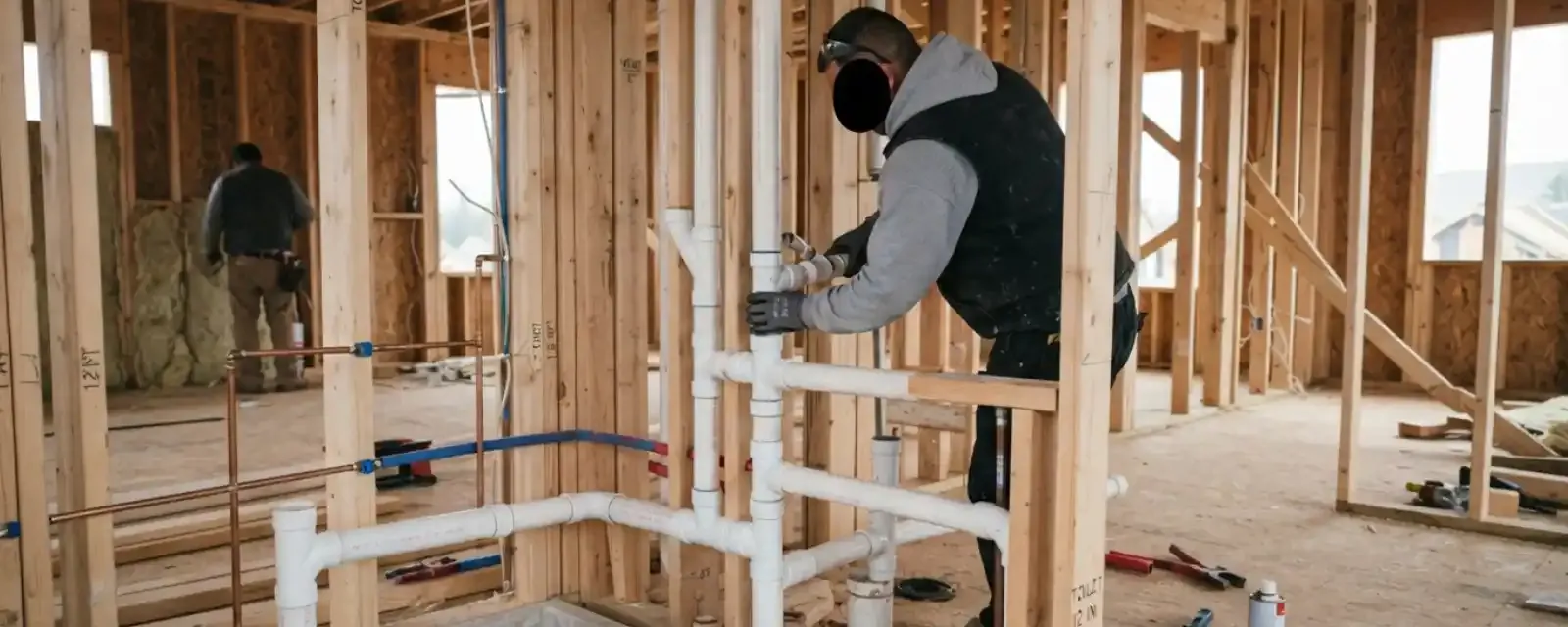
Can you put a toilet in your basement?
Usually yes, but the answer depends on the height of your sewer line compared with the basement floor. If the main drain runs below the slab, waste can flow out by gravity. If the drain is at or above the floor level, waste has to be lifted with a pump.
That one fact, gravity or lift, decides the equipment, the digging and the work involved. A plumber checks the depth of your main line before recommending a setup. Illinois requires a license for plumbing work, and Darien requires permits when plumbing is changed.
The sections below explain each option, the vent rules and what to ask before you start.
Three ways to drain a basement toilet
Each setup suits a different basement. Choosing wrong is expensive to fix.
| Setup | How it works | Best when | Trade-off |
|---|---|---|---|
| Standard gravity toilet | Waste drops into a drain below the slab | The main sewer line is deeper than the floor | Needs the slab opened to run pipe |
| Sewage ejector pit | A sealed pit with a pump lifts waste to the main drain | The drain is higher than the floor and you want full-size fixtures | Needs a pit cut into the slab and a sealed, vented lid |
| Upflush toilet with macerator | A unit behind or beside the toilet grinds waste and pumps it up | You cannot cut the slab or need a quick add | Mechanical parts, noise and limits on what can be flushed |
A plumber should confirm the depth of the main drain and the pipe material before you decide.
How a basement toilet install usually goes
- 1
Plan the location
The plumber checks the main drain depth, the nearest vent and where framing allows a bathroom.
- 2
Get the permit
Ask Community Development about the permit and any inspection steps before work starts.
- 3
Rough in the drain and vent
Slab cutting, pit work or pump install happens, along with a vent line that reaches the roof or ties into an existing vent.
- 4
Set the toilet and test
The fixture is set, sealed and flushed repeatedly, and the pump or joints are checked.
Venting is not optional
Every toilet needs a vent so the drain flows freely and sewer gas stays out of the room. In a basement, the vent usually ties into an existing vent stack or runs up a wall to the roof. A vent that is too small or poorly placed causes slow flushing and gurgling.
Some upflush units use a small carbon filter vent and can be used where code allows. Ask the plumber and the City which approach applies. Never assume a studor-style air valve will satisfy a permit inspector without asking.
What Darien basements and older sewer lines mean for a new toilet
Darien began as the subdivisions of Marion Hills, Brookhaven, Farmingdale and Hinsbrook in the 1960s, and many homes there have basements with original sewer lines under the slab. Those lines were often cast iron or clay tile, and age can bring roots, offsets or cracks.
Adding a toilet puts more flow on that old pipe. Before you open the slab, a camera inspection can show whether the main line is in good shape. Our sewer camera inspection service gives you a video of the line. Fixing a collapsed pipe after you have finished a bathroom is a much bigger job.
Sump pump discharge is a separate system. The City asks residents to keep sump water off the sanitary sewer, so do not tie new basement plumbing into the sump line. Drain, vent and fixture work for the bathroom falls under the standards in the Illinois Plumbing Code (Title 77, Part 890 of the Illinois Administrative Code), and pump units come with manufacturer guidelines you should follow.
Things to settle before you hire anyone
A short checklist saves surprises on day one.
- Where is the main drain and how deep?This sets gravity versus pump.
- Where is the nearest vent?A far vent means more pipe and more wall work.
- Is the slab easy to cut?Floor finishes, radiant heat or an old slab change the plan.
- Is there a backwater valve?A basement toilet sits low and is exposed if the sewer backs up in a storm.
Tell dispatch what you know. If you want to plan a full bathroom, our plumbing installation page covers rough-ins for remodels.
What affects the cost of a basement toilet
The toilet itself is the smallest part of the job. The plumbing around it is what moves the price. You will hear a clear price before work starts.
Planning a basement bathroom? Call (630) 822-9290 and describe the space.
Planning a basement bathroom?
Tell dispatch what you have and what you want. We will explain what the first visit looks like.
Your toilet will be the lowest fixture in the house
A basement toilet sits lower than every other fixture and often lower than the street sewer. If the sewer backs up, the lowest drain is where water appears first. Ask about a backwater valve or an alarm on the pit.
Also keep the toilet itself in good order. Our toilet repair and installation page explains how toilets are set, sealed and tested, which applies to basement units too.
Basement toilet questions from Darien homeowners
The City of Darien requires permits whenever plumbing is changed. Contact Community Development at 1702 Plainfield Rd to confirm the exact steps and inspections.
Illinois requires a license for anyone who installs or alters plumbing. A homeowner may have different rules for their own home, so ask the City, and expect inspection of drain and vent work.
It can be when cutting the slab is not practical. It has mechanical parts, makes noise and limits what you can flush. Ask a plumber whether it fits your basement and local rules.
A low fixture is the first place sewage appears if the main backs up. A backwater valve helps in some cases. Ask a plumber whether one fits your line.
It can. Cast iron and clay lines from the 1960s may have roots or cracks. A camera inspection before slab work is a sensible step.
Yes. We cover Downers Grove and Woodridge from the same dispatch line. Call with your address and what you want to add.