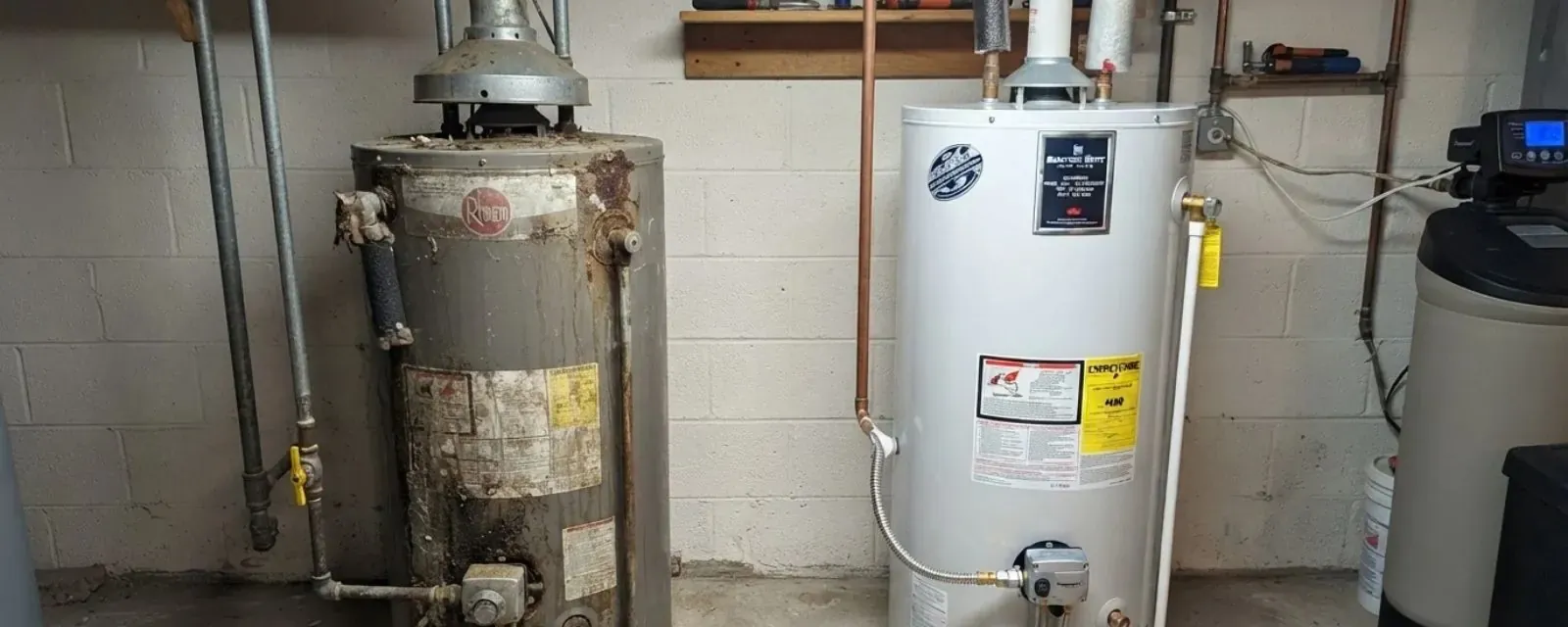
The short answer on expansion tank cost
An expansion tank install is usually one of the smaller jobs a plumber does on a water heater. The tank itself is a modest part. The price moves with how easy the connection is to reach, whether the heater is being replaced at the same time and whether the house needs other fixes first.
Plenty of homes in Darien already have one. Many do not, and a lot of homeowners find out only when a relief valve drips. If you want a firm number for your house, call (630) 822-9290 and describe the heater. You will hear a clear price before work starts.
The rest of this page explains what the tank does, which factors change the cost and what a Darien homeowner should check before calling.
What the tank does inside your plumbing
Water expands when it heats. In an open system the extra volume just pushes back toward the street. In a closed system it has nowhere to go, so pressure climbs every time the burner or element runs.
- It absorbs the extra volumeA rubber diaphragm splits the tank into a water side and an air side. The air cushion gives the expanding water somewhere to go.
- It protects the relief valveWithout a cushion, the temperature and pressure relief valve on the heater may open again and again. A drip at that valve is a common first clue.
- It protects the rest of the houseRepeated pressure spikes stress supply lines, faucet cartridges, toilet fill valves and the heater itself.
The tank does not replace the relief valve. It works alongside it. Never cap or plug a dripping relief valve. Call a plumber instead.
Does your house have a closed system?
A closed system happens when something stops water from flowing backward into the main. Here are the usual causes and what each one means for your tank.
| What is on your supply line | Effect on pressure | What it means for an expansion tank |
|---|---|---|
| A check valve or backflow preventer at the meter | Blocks backflow, so the system is closed | A tank is normally needed |
| A pressure reducing valve on the main | Often acts like a check valve | A tank is normally needed |
| No device and an open path to the main | Expanding water can drift back | A tank may not be needed, a plumber confirms |
| A new meter or new valve installed by the utility | May have changed an open system to closed | Recheck even if you never needed a tank before |
Do not guess from the table. A plumber with a pressure gauge on a hose bib can tell you what your house is doing.
That last row matters. A house that ran fine for years can become closed after a utility or plumbing change.
What Darien's water supply means for your tank
Darien buys treated Lake Michigan water from the City of Chicago, and the two master meters sit at the Plainfield Road and 75th Street pump stations. Your own meter and the valves around it are a separate matter. That is the part that decides whether your system is closed.
So the useful move is to look near your meter and main shutoff for a check valve or a pressure reducing valve. If you see one, assume the system is closed and check the heater for an expansion tank. Permit questions for water heater work go to the City of Darien Community Development Department at City Hall, 1702 Plainfield Rd.
What changes the cost of the install
Every house is a little different. These are the things a plumber weighs when giving you a price.
Want a number for your house? Call (630) 822-9290 and tell dispatch what the heater looks like.
Safety steps before anyone touches the heater
Water heaters combine heat, pressure and power or gas. A few rules keep a simple job from becoming an injury.
- Power or gas off firstSwitch off the breaker for an electric unit. For gas, turn the control to off and close the gas valve. If you smell gas, leave and call 911 or the gas utility.
- Relieve pressure before opening anythingClose the cold supply and open a hot tap so pressure drops before any fitting is loosened.
- Respect the scald riskWater in the tank and the first draw from the relief pipe can be hot enough to burn. Let it cool and keep hands and faces clear.
- Leave the T&P valve aloneNever cap, plug or tighten shut the temperature and pressure relief valve or its discharge pipe.
Signs your water heater may already need an expansion tank
You do not have to wait for a failure. A few clues point to thermal expansion trouble.
Dripping at the relief valve
A little water at the discharge pipe each time the heater cycles is the classic sign. If the drip never stops, the valve itself may be bad, which is a repair for water heater repair.
Banging pipes after a heating cycle
A thump when hot water is first used or after the burner shuts off can come from pressure swings, though loose pipe straps cause the same noise. A plumber sorts out which.
Short-lived faucets and fill valves
If cartridges and toilet parts fail more often than they should, high pressure may be the quiet cause.
How the installation goes
- 1
Check the pressure
The plumber puts a gauge on a hose bib and reads the house pressure. The tank's air charge must match it.
- 2
Shut off and drain down
Water to the heater is closed, power or gas is made safe and a short section of cold line is drained.
- 3
Add the connection
A tee goes on the cold supply near the heater, with a support so the tank's weight does not strain the pipe.
- 4
Set the air charge
The tank's air side is adjusted to the measured house pressure before it is put in service.
- 5
Refill and test
The system is filled, purged of air and checked for leaks, and the relief valve is looked over.
Relief valve dripping?
Call dispatch and describe the heater. We will tell you whether it sounds like expansion trouble or a failing valve.
Common mistakes with expansion tanks
The biggest one is skipping the pressure check. A tank shipped with a factory air charge that does not match your house will not work properly. The second is mounting the tank so its full weight hangs on a copper line with no support. The third is treating a dripping relief valve as a nuisance and plugging it.
Support, fittings and relief valve discharge should follow the standards in the Illinois Plumbing Code (Title 77, Part 890 of the Illinois Administrative Code) and the tank maker's manufacturer guidelines.
Replacement matters too. An expansion tank can lose its air or its diaphragm and become waterlogged. Tap it. A tank that sounds dull and solid all the way down is a candidate for replacement. If your heater is old and you are weighing a bigger change, our water heater replacement page explains that decision.
Expansion tank questions from Darien homeowners
No. It depends on whether your supply is a closed system, which a plumber can check with a pressure gauge and a look at the valves near your meter. Many homes with a check valve or pressure reducing valve do need one.
Illinois requires a license for plumbing work, and the City of Darien asks that permits be handled through Community Development when plumbing is changed. Call a licensed plumber rather than cutting into the supply line yourself.
Tap the tank. A healthy one sounds hollow near the top and solid near the bottom. If it is solid all over, or water spurts from the air valve when pressed, the diaphragm may be gone.
Often a closed system still benefits from one, but the right answer depends on the unit and the plumbing. Our tankless water heater page covers installs and what to ask.
Pressure at the street varies by location, and your own pressure reducing valve changes it again. That is why the plumber measures at your house and sets the tank's air charge to match.
Yes. Dispatch answers 24/7, and same-day appointments are offered when available. If the relief valve is gushing, shut off the heater's water and power or gas first, then call.