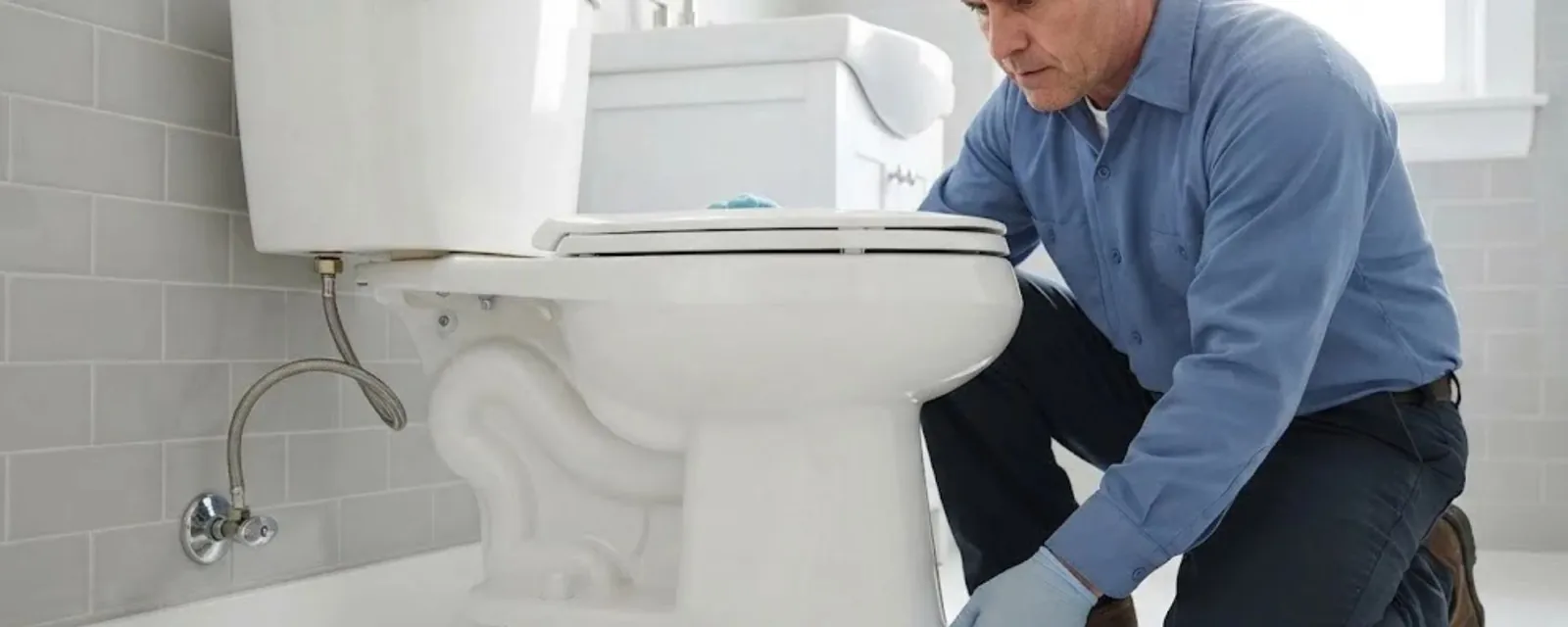
What actually happens inside the bowl
A toilet flushes by siphon. Water rushes into the bowl, fills the curved passage built into the base and pulls everything through. A clog happens when something wedges in that passage or just beyond it and the siphon cannot start.
Usually the cause is more material than the water can carry, not a broken toilet. A thick wad of paper, a wipe or a toy is enough. If the water rises, stops and slowly sinks, the clog is probably partial. If it rises and does not move, stop flushing and read the section below on what to do first.
If you need help right away, call (630) 822-9290. Dispatch is open 24/7.
Common causes, from most to least likely
Plumbers see the same culprits again and again. This table lines them up with what the clog usually looks like.
| Cause | How it behaves | Usual next step |
|---|---|---|
| Too much toilet paper | Bowl fills, drains slowly, often clears with a plunger | Plunge, then flush in smaller batches |
| Wipes sold as flushable | Strands knot together and catch inside the trap | Plunger or closet auger, sometimes pull the toilet |
| Hygiene items and paper towels | Do not break down, plug the trap | Auger or pull the toilet |
| Toys and small objects | Sudden clog after a child was near the bathroom | Stop flushing and call |
| Weak flush from mineral buildup | Rim holes clogged, bowl never fills fully | Descale the rim holes, check the fill valve |
| Partial vent blockage | Gurgling, slow drain, clog returns | Plumber checks the vent |
| Main line trouble | Several fixtures act up at once | Stop water use and call |
Tables show common patterns, not a diagnosis. A plumber confirms the cause on site.
Why wipes cause so many clogs
Toilet paper is made to fall apart in water. Wipes are made to hold together. Even products labeled flushable tend to hang together long enough to snag on roots, rough pipe joints and each other further down the line.
One wipe may pass through. Over weeks, a few of them build a rope in the branch drain. The toilet clogs, and then the next one does. If you want to cut your clogs, put the wipes in the trash and keep the flush to paper and waste.
Low-flow toilets and weak flushes
Modern toilets use less water per flush than older ones. That is good for the water bill but it leaves less water to push a heavy load through. A toilet with the wrong fill height, a worn flapper or blocked rim jets can flush weakly and clog far more easily.
If a toilet clogs every week with normal use, the problem may not be what goes in. It may be the toilet. A plumber can adjust the fill valve, replace the flapper or suggest a different bowl. Our toilet repair and installation page covers those fixes.
What to do the first time it rises
The first minute matters. A few small moves keep a mess from becoming a flood.
- Do not flush againA second flush on a full bowl can send water over the rim.
- Lift the tank lid and lower the flapperPushing the flapper down by hand stops more water entering the bowl.
- Use a flange plungerSeal over the drain hole and push gently first, then firmly. Several slow strokes beat quick ones.
- Skip chemical openersThey sit in standing water and can burn skin and damage the next plumber's tools and your fixtures.
If two or three careful plunges do nothing, stop. More force can push the clog deeper or crack a bowl.
Older Darien homes and toilet clogs
Darien incorporated in 1969 from the Marion Hills, Brookhaven, Farmingdale and Hinsbrook subdivisions, so many homes date from the 1960s onward. Homes from that era often have older cast iron or clay drain lines under the basement floor, and roots or rough joints can catch paper and wipes.
What that means for you: if a toilet in an older house clogs again within days of being cleared, the problem may be below the toilet. Ask for a camera look instead of another quick plunge. Our sewer camera inspection shows the pipe from the inside.
When the plunger fails: what a plumber does
- 1
Look at the pattern
We ask which fixtures act up and whether the clog is new or repeated.
- 2
Try a closet auger
A short, flexible cable made for toilets passes through the trap without scratching the porcelain.
- 3
Pull the toilet if needed
If the obstruction is solid, such as a toy, lifting the toilet is the clean way to reach it.
- 4
Check the line
If other drains are slow, we cable the branch or main and run a camera when the clog keeps returning.
Toilet overflowing right now?
Close the supply valve behind the toilet, stop using water in the house and call dispatch. A plumber can be on the way.
What affects the price of clearing a toilet clog
There is no flat price because the cause changes the work. You will hear a clear price before work starts.
For a number on your clog, call (630) 822-9290.
Toilet clog questions from Darien homeowners
A weak flush, a partial blockage in the line or a vent problem can make a normal load stall. If it keeps happening, have the toilet and the drain line checked instead of buying another plunger.
We would not trust them. Even wipes marked flushable can snag in older cast iron or clay lines and build a clog. The trash can is the safer place.
Often, yes. If the basement floor drain gurgles when the toilet flushes, the main line may be restricted. Stop using water and call, and see our drain cleaning page for what happens next.
Yes. Dispatch is open 24/7. If the bowl is overflowing, close the supply valve behind the toilet and call (630) 822-9290.
The City of Darien has told residents to keep sump pump discharge off the sanitary sewer. Water sent into household drains can load the sewer during storms, so confirm your discharge goes outside. The city number is (630) 353-8105.
Clearing a clog normally does not change the plumbing. Replacing or relocating a toilet is a different case that should meet the standards in the Illinois Plumbing Code (Title 77, Part 890 of the Illinois Administrative Code), so ask the City of Darien Community Development Department before work begins.