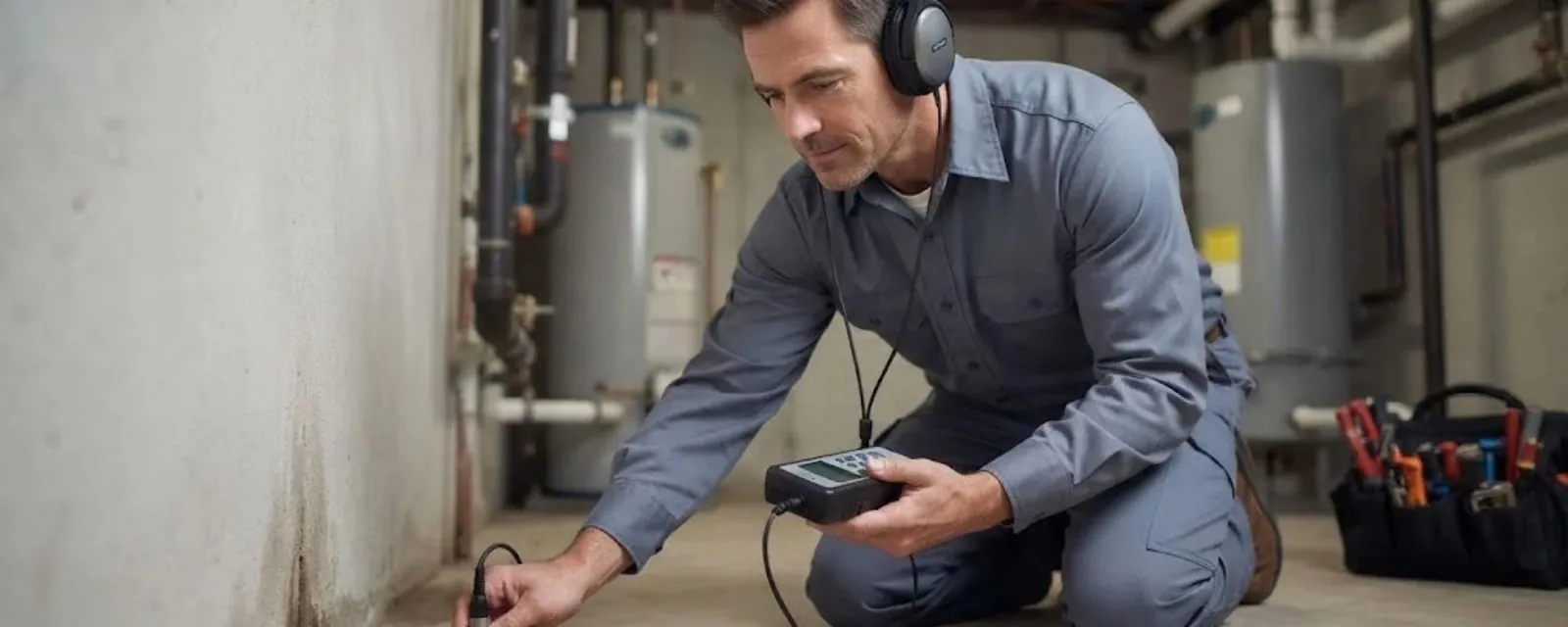
What tracer gas detection is, in plain words
Tracer gas detection finds a leak by putting a light, harmless gas into an isolated pipe and then sniffing the surface above for any gas that escapes. Where the reading spikes, the pipe is leaking. Two gases are used most often: helium, and a blend of a small amount of hydrogen in nitrogen that is sold for exactly this purpose.
The idea is simple. Gas molecules are far smaller than water molecules, and they rise. A leak too small to stain a ceiling will still let gas through, and a sensitive handheld detector can pick up the trace at the floor, the drywall or the slab above. That lets a plumber mark a spot instead of guessing.
It is a locating method, not a repair. Once the spot is marked, the pipe still has to be opened and fixed. If you have a rising water bill or a wet floor and no visible source, call (630) 822-9290 and describe what you see. Our leak detection page explains the full process.
How a tracer gas test usually goes
Every home is different, so the order shifts a little. This is the general shape of the work.
- 1
Confirm there is a leak
The plumber shuts off fixtures and watches the water meter. A meter that keeps moving with everything off points to a leak somewhere between the meter and the faucets.
- 2
Isolate the line
The section under suspicion is closed off at both ends and drained, so gas can fill it without water in the way.
- 3
Fill with tracer gas
The gas goes in at low pressure through a fitting. It is mixed so that it is not flammable at the proportions used, and it has no smell or color.
- 4
Scan the surface
The plumber walks the floor and walls with a handheld detector, moving slowly and noting the highest readings.
- 5
Mark and explain
The strongest reading is marked. You get a plain explanation of what is under that spot and what opening the surface would involve.
Tracer gas compared with other ways to find a leak
No single method wins every time. A good plumber chooses by the pipe type, the floor finish and how the leak behaves.
| Method | What it does well | Where it struggles |
|---|---|---|
| Tracer gas | Finds small leaks in pipes buried in slabs, walls and under finished floors | Needs a pipe that can be isolated, and deep or very windy conditions weaken the reading |
| Acoustic listening | Hears the hiss of pressurized water leaking | Tiny leaks are quiet, and traffic or HVAC noise drowns them |
| Thermal imaging | Shows cool or warm patches from leaking hot lines or wet materials | Shows wetness, not the exact point, and works best with a temperature difference |
| Pressure test | Confirms whether a line holds pressure at all | Says yes or no, not where |
| Sewer camera | Shows cracks, roots and offsets inside drain pipes | Does not help with pressurized supply leaks |
Plumbers often combine two methods. Ask which ones fit your situation before you agree to work.
Why helium and hydrogen-nitrogen are the usual tracers
Helium is inert, light and not found in meaningful amounts in the air of a house, so a detector reading it means the gas came from the pipe. Its small atoms slip through tiny gaps quickly. It is more costly to buy than other options, which is one reason some crews prefer the blend.
The hydrogen-nitrogen mix is mostly nitrogen, the main gas in air, with a small share of hydrogen. At the proportions sold for leak work it is considered non-flammable. Hydrogen is the lightest gas there is, so it rises fast and a detector can respond to it at very low levels.
Neither gas is a gas-supply line fix. If you ever smell gas in your home, leave, then call 911 or your gas utility. Do not try to test or trace gas piping yourself.
What this means in Darien homes
Darien was incorporated in 1969 by residents of the Marion Hills, Brookhaven, Farmingdale and Hinsbrook subdivisions, so much of the housing dates from the 1960s onward. Houses from that era commonly have piping that was routed through slabs, crawlspace areas or finished walls, and some of those lines have now been in service for decades.
That is where tracer gas earns its place. If a line is running under a finished basement floor, breaking concrete in the wrong spot costs time and money and still may miss the leak. Marking the spot first limits how much of your floor has to be opened.
Darien buys treated Lake Michigan water from the City of Chicago, and it is metered. That makes the meter a useful first clue, since a dial that moves with every tap closed means water is going somewhere. The City's water operator number is (630) 353-8105 if you want to ask about your account.
When tracer gas is worth asking about
It is not the first tool for every wet spot. These situations tend to justify it.
- The meter moves and nothing is visibleA hot or cold supply line buried in a slab or a wall can leak for months before anything shows.
- A tile or hardwood floor is involvedMarking the leak before cutting protects the finish around it.
- Acoustic listening came up emptyA leak with little pressure behind it makes little noise, but gas still finds it.
- A warm spot on a floorA hot water line leaking under a slab can warm a patch of floor. A plumber can confirm it with gas.
A running toilet or a dripping faucet does not need this. Those are simple checks, and our toilet repair team handles them in a normal visit.
What affects the price of a tracer gas test
Pricing is not a flat menu because every house is different. You will hear a clear price before work starts, and you decide whether to go ahead.
Want a real number for your house? Call (630) 822-9290.
Meter running and no visible leak?
Describe what you see and the dispatcher will tell you the safest next step, day or night.
What tracer gas will not do
It will not tell you how bad the damage is, and it will not find a leak in a pipe that cannot be sealed off. It also will not work well if the pipe is filled with water, which is why the line is drained first.
Some leaks are in drain pipes, not supply pipes. For those, a camera is the better tool, and our sewer camera inspection shows cracks and offsets directly. If the water is coming from outside the house, the leak may be on the service line from the street, and a different repair applies.
Whatever repair follows a locate is done under the standards in the Illinois Plumbing Code (Title 77, Part 890 of the Illinois Administrative Code).
Tracer gas leak detection questions from Darien homeowners
The gases used are the kind sold for leak work, a helium fill or a small amount of hydrogen in nitrogen. At those proportions the blend is considered non-flammable and the quantity is small. Ask the plumber for the product details and follow any instructions on ventilation.
That is a separate job and a safety issue. If you smell gas, leave the house and call 911 or the gas utility from outside. Do not try to trace gas piping on your own.
Start with the meter. If it keeps moving with every fixture closed, you likely have a leak. A plumber looks at the accessible parts first, and tracer gas is for leaks buried in slabs or walls where nothing shows.
Permits are required whenever plumbing is changed. Ask the City of Darien Community Development Department, 1702 Plainfield Rd, whether your repair needs one. Illinois requires a license for plumbing work.
Dispatch is open 24/7 for leaks that are actively flooding. Locating work for a slow, hidden leak is usually scheduled, and same-day appointments are offered when available.
Yes. The same line covers Downers Grove, Woodridge, Willowbrook and Westmont. Tell dispatch your address and we will confirm availability.