The quick test: is water moving when nothing is on?
Your meter counts every gallon that enters the house. If nothing is using water and the meter still moves, water is going somewhere. That is the whole idea behind the test.
Shut off every tap, the dishwasher, the washing machine, the ice maker and any humidifier. Find the meter, usually in the basement near the main shutoff. Look at the leak indicator, a small triangle or dial on most meters, and see whether it is turning. If it is, you likely have a leak.
Not sure what you are seeing? Call (630) 822-9290 and a plumber can walk you through it.
The meter test, step by step
- 1
Stop all water use
Close taps, turn off appliances that draw water and make sure nobody flushes during the test.
- 2
Find the meter
Look near where the main supply enters the home. Many have a lid or a small window over the dial.
- 3
Read and record
Write down the numbers or note where the leak indicator sits.
- 4
Wait without using water
Give it about fifteen minutes. A longer wait, such as two hours, catches slower leaks.
- 5
Compare
If the reading changed or the indicator moved, water is leaking somewhere after the meter.
What the result usually means
The meter gives you a yes or no. The pattern narrows down where to look.
| What you see | What it often points to | Next move |
|---|---|---|
| Meter still, indicator still | No leak right now | Check for an intermittent leak, like a toilet that runs on and off |
| Indicator turns slowly | A small leak, often a toilet flapper | Do the dye test below |
| Dial moves steadily | A larger leak, such as a supply line or service line | Close the main and see whether it stops |
| Moves only when the heater runs | A relief valve or heater connection | Check the discharge pipe |
| Stops when you close the main | Leak is inside the house | Call for leak detection |
| Keeps moving after the main is closed | You may be looking at a meter fault or a leak at the meter | Call the utility and a plumber |
These are common patterns and not a diagnosis.
The toilet dye test
The most common hidden leak is a toilet. A worn flapper lets water seep from the tank into the bowl with no sound.
- Add dye to the tankA few drops of food coloring in the tank are enough.
- Wait without flushingFifteen to twenty minutes is typical.
- Look in the bowlColored water in the bowl means the flapper or flush valve is leaking.
- Flush afterwardClear the dye so it does not stain the tank.
A leaking flapper is a low-cost part but can waste large volumes over a month. Our toilet repair service handles flappers, fill valves and flanges.
What Darien homeowners should know about their water service
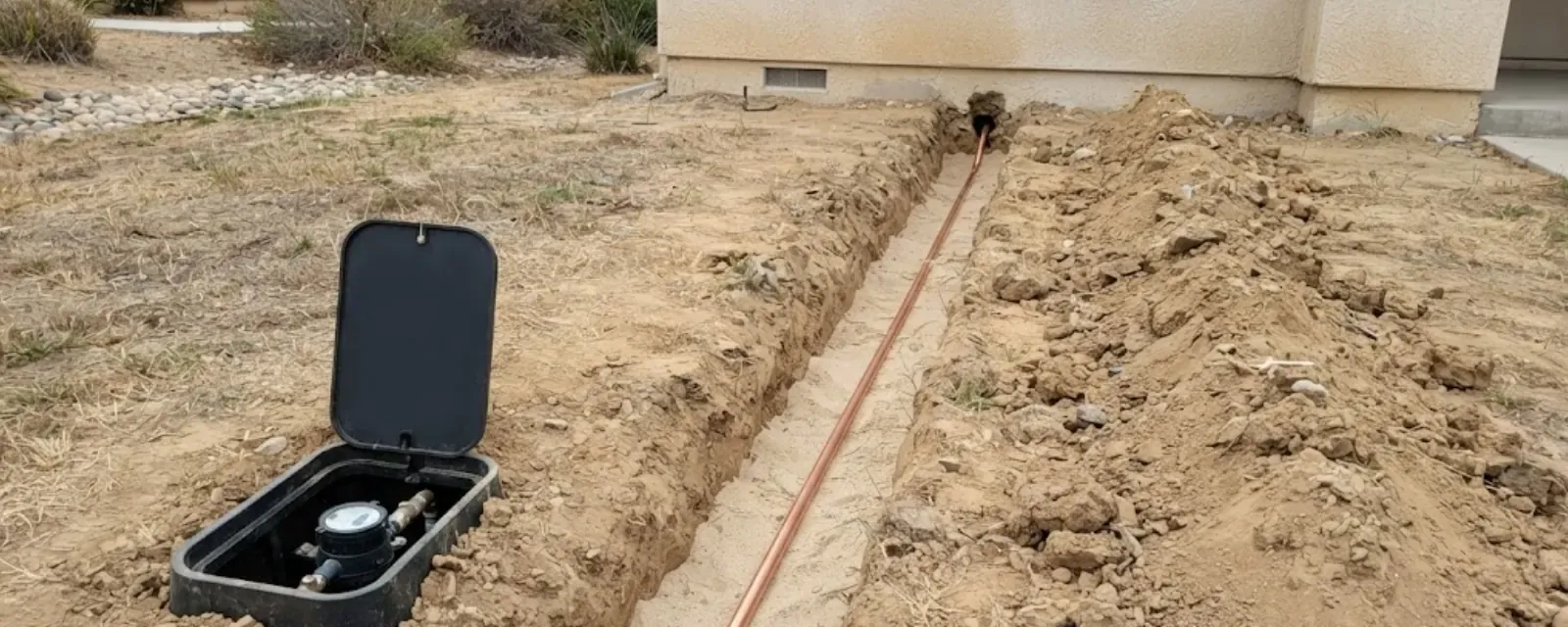
Darien buys treated Lake Michigan water from the City of Chicago, and the city's two master meters sit at the Plainfield Road and 75th Street pump stations. Your home meter is a separate meter. The pipe between the street and your meter is the service line, and a leak there shows up on your meter as constant movement.
The City also reports that it is still completing its service line material inventory. If you think the leak is outside the house, call the City water operator at (630) 353-8105 and ask who maintains which section. Questions about permits for any repair go to the Community Development Department at 1702 Plainfield Rd.
Safety steps around the water meter
The meter is a utility asset, and the area around it can be hazardous.
- Do not force the lidIf a meter lid or pit cover is stuck, stop. Prying can break the meter or injure you.
- Watch for traffic and hazardsIf the meter sits in a pit near a driveway or street, watch for vehicles, standing water, insects and uneven ground.
- Leave the utility valve to the utilityUse your own main shutoff inside the house. Do not operate the utility's shutoff beyond what the utility allows. Call (630) 353-8105 with questions.
- Keep electricity away from waterIf water is pooling near panels or outlets, stay out and call for help.
Where hidden leaks usually are
After toilets, the next suspects are irrigation lines and outdoor spigots, water heaters, supply lines under sinks and the service line itself. A leak in a slab or behind a wall can run for months with no wet spot.
Warning signs beyond the meter include a warm spot on the floor, the sound of running water in a quiet house, a musty smell, peeling paint and a bill that rises without a change in habits. If you see several, call a plumber instead of waiting.
Meter moving with everything off?
Close the main shutoff and call dispatch. We will help you trace where the water is going.
What affects the cost of finding a hidden leak
Finding a leak is detective work, and the price follows the effort.
For a number on your situation, call (630) 822-9290.
If the leak is on the service line
A steady meter run with nothing on inside often means a service line problem. Repairs may involve digging, so the plan depends on depth, surface and access, and the pipe work should meet the standards in the Illinois Plumbing Code (Title 77, Part 890 of the Illinois Administrative Code). Our water service line repair page explains the process.
Hidden leak questions from Darien homeowners
It is usually in the basement near where the main supply enters, close to the main shutoff. Homes differ, so if you cannot find it, a plumber can point it out.
Check for an intermittent leak, like a toilet that refills on its own, or an irrigation system. Compare your bill to the same season last year and ask the City about the reading schedule at (630) 353-8105.
Yes. Dispatch is 24/7. If water is flowing, close the main shutoff and call (630) 822-9290.
Yes. Pipes under a slab can leak without any surface sign. A warm spot, a constant meter and the sound of water are clues, and a plumber can confirm with tools.
The test works on any home meter. We also serve Downers Grove and Westmont, so call the same line.
Yes. Closing the main stops the water while you wait. Turn the valve fully and open a low faucet to relieve pressure.